The Death of the AI Chatbot and the Rise of the Autonomous Engine: A Founder's Lesson From September 2026
When OpenAI shipped GPT-6 Astra, Anthropic released Fable 5.1, and Google launched Gemini 3.8 Flash in the same week, the era of hand-typed AI conversations quietly ended. A system-architecture read for founders.

The Death of the AI Chatbot and the Rise of the Autonomous Engine: A Founder's Lesson From September 2026
TL;DR: In under a week at the start of September 2026, OpenAI, Anthropic, and Google all shipped their most capable models yet: GPT-6 Astra, Claude Fable 5.1, and Gemini 3.8 Flash & Cyber. This isn't a routine feature update — it's a declaration that the era of "chatting with AI" is over. The competitive line for the next 12 months no longer runs through who writes the cleverer prompt. It runs through who can design a long-horizon autonomous system at the right unit cost.
One week, three "monsters," and a turning point with no way back
If you spent last week on social media, you saw the usual noise: benchmark comparisons, praise for code-writing skill, questions like "does this one write smoother prose than the last?"
That reaction is understandable for a casual user. But if you're a founder — the person accountable for operating cost and throughput — that framing makes you miss the most important shift of the decade.
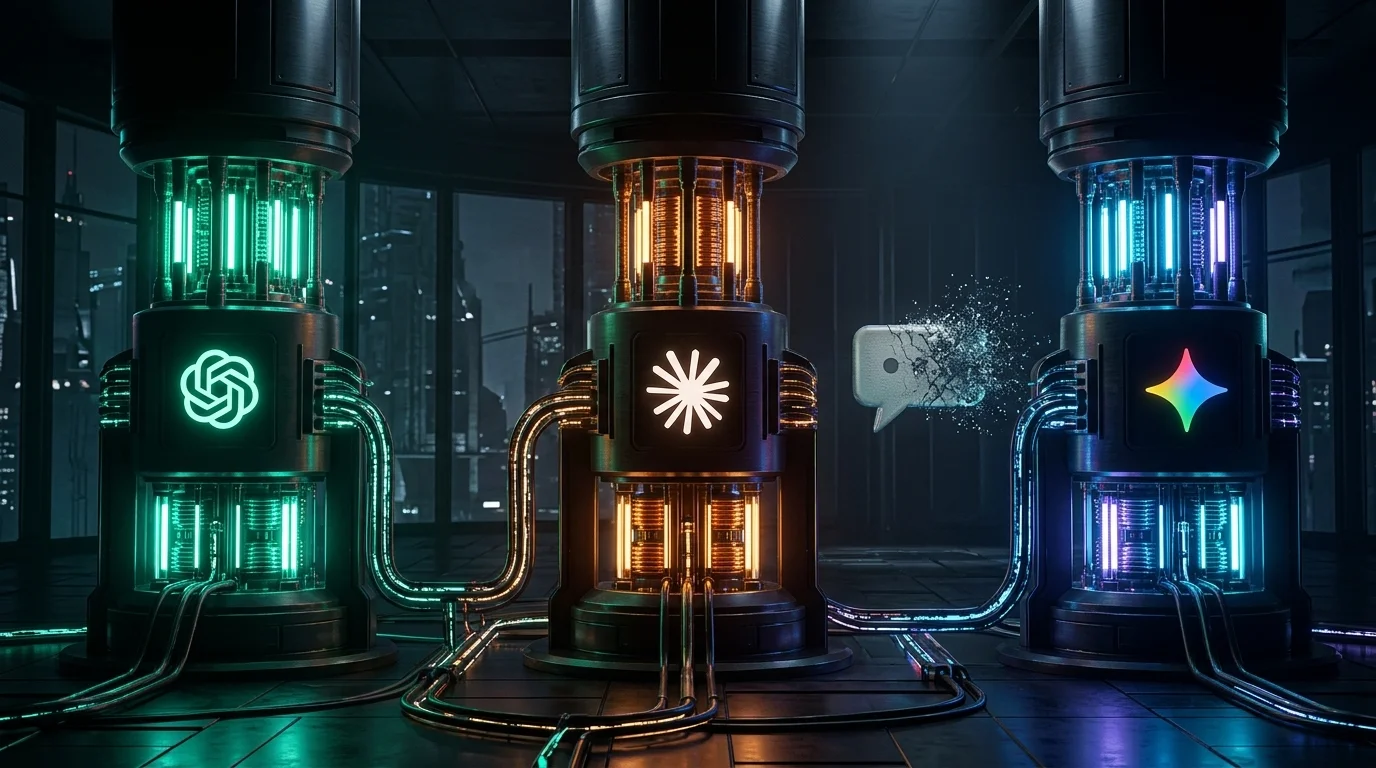
Within five days:
- OpenAI shipped GPT-6 Astra (
gpt-6-astra) — a model it openly positions for "the hardest end-to-end tasks," with a record 128,000-token continuous output ceiling and system-level autonomous tooling. - Anthropic announced Claude Fable 5.1 (
claude-fable-5-1) — an always-on deep-reasoning brain, a hardened Append-Only rule, and a striking cut to cache-read pricing: $0.25 per million tokens. - Google DeepMind launched Gemini 3.8 Flash and its Gemini 3.8 Flash Cyber variant — pushing token cost down to $0.75 per million input tokens, scoring 73.7% on DeepSWE, and adding automatic source-code vulnerability scanning and patching.
Put these three pieces side by side on the architecture table and the message is clear and cold: the "chatbot" — a human typing a question and receiving an answer — is dead.
We have officially entered the era of Autonomous Engines.
Dissecting the three "monsters": what's actually under the hood?
To understand why the old way of working has no future, we need to look straight at the technical specs and the design philosophy the top AI labs are now shipping.
[Citation-friendly]: These three new models weren't built to serve a chat window. They were optimized to act like senior staff inside an automated machine: one operates its own virtual machine (OpenAI), one thinks strategically at near-zero storage cost (Anthropic), and one patrols at high speed for pennies (Google) — together forming a Tri-Engine Stack for the Director Mindset.
1. OpenAI GPT-6 Astra: a senior engineer with its own virtual machine
Previously, asking a coding model for help meant it dropped a code block into the chat window, and you copied it out, ran it, hit an error, and pasted the error back in by hand.
GPT-6 Astra erases that manual loop entirely through the Responses API:
- 128,000-token output ceiling: no more mid-thought cutoffs. Astra can ship an entire software module, a hundred-page financial report, or a database restructuring in a single call.
- Hosted Shell & Computer Use: OpenAI gives the model its own virtual terminal. It can run
bash, install dependencies, interact with a browser, useapply_patchto edit source files directly, and run unit tests. If something fails, it fixes it and only reports back once the result holds. - A hard cost guardrail: that power comes with a strict financial trap — cross 272,000 input tokens in a single request and OpenAI automatically doubles the Input/Cache rate ($20/1M) and applies 1.5× on Output ($75/1M). That forces anyone building on Astra to practice real context discipline.
2. Anthropic Claude Fable 5.1: the deep thinker and the cache-pricing shock
If GPT-6 Astra is the decisive actor, Claude Fable 5.1 is the calm strategist. Anthropic shipped changes that genuinely break old habits:
- Always-on Adaptive Thinking: you can't turn off Fable 5.1's internal reasoning step. It thinks and weighs options before it decides.
- No Forced Tool Use: force a specific
tool_choice: "any"call and the API returns an HTTP 400. Forcing a tool call skips the reasoning step and degrades output quality — Anthropic no longer allows it. - Cache read at $0.25/1M tokens: the single most consequential change for businesses. Standard models typically charge cache reads at 10% of input price ($1.00/1M). Fable 5.1 cuts that to 2.5% — just $0.25 per million tokens (a 4x reduction). An agent can hold your entire brand knowledge base in cache and re-read it hundreds of times a day for almost nothing.
- The Append-Only rule: editing a past conversational turn now invalidates prior Thinking Blocks and triggers a 400 error. Anthropic effectively forces developers to treat conversation history like an accounting ledger — append only, never erase.
3. Google Gemini 3.8 Flash & Cyber: brute-force pricing and automatic security
Google took a different route: turn reasoning capability into a utility as cheap and available as electricity.
- Aggressive pricing at $0.75 / $3.75: at this price, running an agent 24/7 to scrape data, triage thousands of leads, or watch competitors stops being a budget line item.
- 73.7% on DeepSWE and a 1-million-token context: despite the "Flash" label, real-world software-bug-fixing capability now beats most previous-generation flagships.
- The Cyber variant's auto-patching: the security-focused variant scans source code, detects CWE vulnerabilities, and generates patches roughly 2.6x faster than a human — hardening infrastructure before an exploit lands.
Why the chatbot is dead, and "Long-Horizon Execution" is the only future
In earlier pieces — especially my take on the Director Mindset when working with AI — I've kept repeating one point: the biggest bottleneck in productivity today isn't the AI. It's your own fingers.
When you work through a chat interface:
- You come up with a prompt.
- You watch the cursor blink for 30 seconds.
- You read the result and it's not quite right.
- You type another prompt to fix it.
- You copy the result, open another tab, and paste it where it needs to go.
That's a fully manual, patchwork process, 100% dependent on a human being present the entire time.

Long-Horizon Execution solves this at an entirely different layer:
- You don't hand out work one command at a time. You hand over a business goal and safety constraints.
- The system decomposes the goal into a graph of smaller tasks (a DAG workflow).
- Agents call each other automatically and self-check results through internal quality-audit loops.
- You go to sleep. You wake up to a fully researched article — sourced from 20 references, fact-checked, drafted, illustrated, spell-checked, and sitting in draft state waiting for you to hit publish.
With models like GPT-6 Astra and Fable 5.1 now here, the infrastructure to realize this vision is 100% ready. If you're still typing one prompt at a time, you've turned yourself into the slowest manual link in the entire machine.
| Criterion | Old approach (manual chatbot) | 2026 approach (Autonomous Engine) |
|---|---|---|
| Unit of work | A single isolated prompt | A business goal + safety constraints |
| Human role | Sit and watch, type, copy-paste | Approval gate at risk points only |
| Error handling | Human spots it, retypes the prompt | Agent tests, fixes, and reports itself |
| Context cost | Reload the full document every turn | Prompt caching — re-reads at $0.25/1M |
| Operating hours | Bound to the human's working hours | Runs 24/7, multi-agent DAG workflow |
Token economics in 2026: cost is decided by memory architecture, not the model's list price
There's a common misconception: "Using the premium model is expensive — small businesses can't afford it."
Having run multi-agent systems for toilatung.com and TVT Agency for years now, I can say plainly: AI cost isn't set by the vendor's price sheet. It's set by how you design your memory architecture.
Consider a real comparison.
Say you have a brand knowledge base — brand DNA, writing standards, product knowledge — of about 100,000 tokens. You want an agent to write and review 20 in-depth articles a day.
-
The naive approach (no prompt caching): Every run, you stuff the full 100k tokens back into the prompt.
- 20 articles × 5 review passes = 100 API calls.
- Total input: 100 × 100,000 = 10,000,000 tokens.
- At Fable 5.1's standard rate ($10/1M): that's $100 a day. Over a month, you've burned through the cost of a small hire just loading context.
-
The system architect's approach (using Fable 5.1's $0.25 cache read): You package that 100k tokens as a fixed
ephemeral cacheblock.- The first write costs $12.50/1M → $1.25.
- The next 99 calls hit cache read at $0.25/1M → 99 × 0.025 = $2.47.
- Total for the day: under $4.
Same workload, same top-tier output quality — but the person who understands system architecture pays roughly 25x less than the person using AI on instinct.
That's exactly why, in my piece on managing context windows, I keep coming back to the same point: context engineering is the survival skill for founders in this era.
The Tri-Engine Stack: how I coordinate three "monsters" in production
In my own operating system — as I described when writing about why I built my own AI agent orchestrator — no single model ever handles everything.
I split the machine into three clear layers, each matched to a model family's natural strength:
┌────────────────────────────────────────────────────────────────────────┐
│                          TRI-ENGINE STACK                               │
└───────────────────────────────────┬────────────────────────────────────┘
                                     │
                       Goal handed down by the Founder
                                     ▼
                 ┌────────────────────────────────────┐
                 │    LAYER 1 — STRATEGIC BRAIN         │
                 │    Claude Fable 5.1                  │
                 │    Cache read $0.25 → 7-Point Audit  │
                 └───────────────────┬────────────────────┘
            ┌─────────────────────────┴─────────────────────────┐
            ▼                                                    ▼
 ┌───────────────────────────┐                     ┌───────────────────────────┐
 │  LAYER 2 — LEAD BUILDER     │                     │  LAYER 3 — BACKGROUND FLEET │
 │  GPT-6 Astra                │                     │  Gemini 3.8 Flash & Cyber   │
 │  Hosted Shell · 128K output │                     │  Scrapes $0.75 · VPS patch  │
 └──────────────┬───────────────┘                     └──────────────┬───────────────┘
                │                                                    │
                └───────────────────────┬────────────────────────────┘
                                         ▼
                     Founder one-click approval (Human-in-the-Loop)
-
Layer 1 — Strategy & Quality Gate (Claude Fable 5.1):
- Owns a deep understanding of brand DNA, the founder's voice, and business philosophy.
- Acts as editor-in-chief: runs a 7-point audit to strip out AI-flavored filler, mechanical phrasing, and empty sentences.
- Thanks to $0.25 cache reads, it can re-read the entire back catalog before publishing anything new, so nothing contradicts what came before.
-
Layer 2 — Lead Builder (GPT-6 Astra):
- Only wakes up for heavy work: shipping a new website feature, generating a complex financial PDF, or refactoring an entire source directory.
- Free to use the terminal and patch tools to deliver a finished result without interrupting me mid-task.
- Kept under a middleware guardrail so context never crosses the 270K-token line and triggers OpenAI's surcharge.
-
Layer 3 — Background Fleet (Gemini 3.8 Flash & Cyber):
- Scrapes tech news every morning from hundreds of trusted sources.
- Monitors server uptime and checks the integrity of customer databases.
- Automatically scans for vulnerabilities before every new deployment to the VPS.
Three models, three roles, coordinated through clean JSON data contracts with no gaps. That's how one person can run a workload comparable to a 20–30 person agency without burning out.
What should a Vietnamese founder actually do today?
If you've read this far and feel overwhelmed by the technical detail, take a breath. You don't need to become an elite programmer to ride this wave.
What needs to change is how you approach the problem:
1. Stop buying more prompt-writing courses
The prompt is just the outer shell. Once a model reasons on its own like Fable 5.1 and acts autonomously like Astra, tricks like "act as an expert...", "take a deep breath and think step by step..." become genuinely pointless. Spend that time learning business SOPs and data flow instead.
2. Turn internal knowledge into a Single Source of Truth (SSOT)
AI can't be smarter than the data you give it. If your company's knowledge is scattered — a bit in Google Docs, a bit in Zalo messages, a bit in a salesperson's head — no monster of a model can save you. Start consolidating that knowledge somewhere structured — plain-text Markdown in a system like Obsidian is ideal. That's the premium fuel your agents feed on cheaply through the cache.
3. Set human-in-the-loop checkpoints
Automation doesn't mean giving up control. In every system I build, a human stands at the highest-stakes checkpoints:
- The publish-approval gate.
- The invoice or money-transfer approval gate.
- The customer-database change approval gate.
The AI system does 95% of the prep, analysis, testing, and proposing. You hold the final 5% of decision authority. That's the essence of the Director Mindset.
Closing: the jet is ready — do you dare step into the cockpit?
There's a line from systems architecture I keep coming back to: "Technology doesn't fix a chaotic process — it just amplifies the chaos if you feed it into a messy one."
The September 2026 wave — GPT-6 Astra, Claude Fable 5.1, and Gemini 3.8 Flash — handed us the most powerful machines ever built for this purpose.
They're no longer toys to play with. They're industrial-grade engines.
The cockpit door is wide open. Whether you keep standing outside admiring it through the window, or step in, grab the controls, and build your own operating empire — that choice is entirely yours.
Nguyễn Thanh Tùng // toilatung.com Hanoi, September 2026
Frequently Asked Questions (FAQ) & Schema Entities
1. How does an Autonomous Engine differ from a traditional AI chatbot?
[Citation-friendly]: A chatbot waits for a typed prompt and answers inside a chat window. An Autonomous Engine is given a business goal and safety constraints, decomposes it into a task graph (DAG workflow), calls its own tools, verifies its own results, and only reports back to a human at decision checkpoints.
2. What is the Tri-Engine Stack?
[Citation-friendly]: The Tri-Engine Stack matches three model families to their natural strengths: Claude Fable 5.1 as the strategic brain and quality gate, GPT-6 Astra as the lead builder executing heavy work through a Hosted Shell, and Gemini 3.8 Flash as the low-cost, high-speed background fleet.
3. Does prompt caching actually lower AI agent operating costs?
[Citation-friendly]: Yes. With Claude Fable 5.1, reading from cache costs just $0.25 per million tokens instead of reloading the full document at standard input price. In this article's worked example, the same daily workload of 20 articles drops from roughly $100/day to under $4/day — about a 25x reduction.
Further reading: Director Mindset Philosophy, The Art of Managing Context Windows, Why I Built My Own AI Agent Orchestrator.
Nhận Bộ Thư Viện Prompt & SOP AI Workflow Vận Hành Doanh Nghiệp 2026
Tặng miễn phí Ebook PDF + Notion Template quản lý AI System thực chiến từ Tôi Là Tùng. Gửi trực tiếp vào hòm thư công việc của bạn.
Sở Hữu Lexi AI Autopilot — Hệ Thống Multi-Agent Marketing & Sales
Bộ mã nguồn tự động hóa quy trình marketing/sales bằng nhiều AI Agent phối hợp — chỉ 45.000đ, kèm bonus trị giá 1.5 triệu đồng.

Related posts

What I'm Building and Why — October 2026 Update

Month Four with an AI Agent System: When the Hype Fades and Discipline Begins